There is a distinctive sound coming from some of fashion and pop culture’s biggest faces today. It is the delicate clinking — or sometimes, the deeper clanging — of a stack of bangles.
Although both are worn around the wrists and arms, bracelets are typically flexible strands of jewelry, while bangles are rigid structures. Over the past few months, bangles have seen a resurgence of popularity among Gen Z; whether it be gold, resin or even glass, the accessory is sure to be seen all season.
Despite the jewelry’s recent trendiness, bangles are not anything new. Ancient Egyptian elites have been recorded wearing ornate golden cuffs, and traditional Chinese civilizations have long coveted jade bangles as bringers of fortune and protection. Archeologists have unearthed cuffs of copper, bronze and terracotta from the Indus Valley civilization, as well as artistic renditions of people wearing bangles like the “Dancing Girl” sculpture from the ancient Harappan Civilization — found in modern-day Pakistan — unearthed in 1926. The “Dancing Girl” is nearly entirely nude, except for the stacks of thick bangles carved along her arms.
As bangles become increasingly popular, their cultural background becomes all the more discarded. The jewelry has long taken center stage in Asian cultures, particularly in South Asia. The word “bangle” comes from the Hindi word bangli, which roughly translates to “glass bracelet.” That said, bangles are not just made from glass — they have historically been carved from everything from metal to bone to jade, with newer styles being formed from plastics like resin.
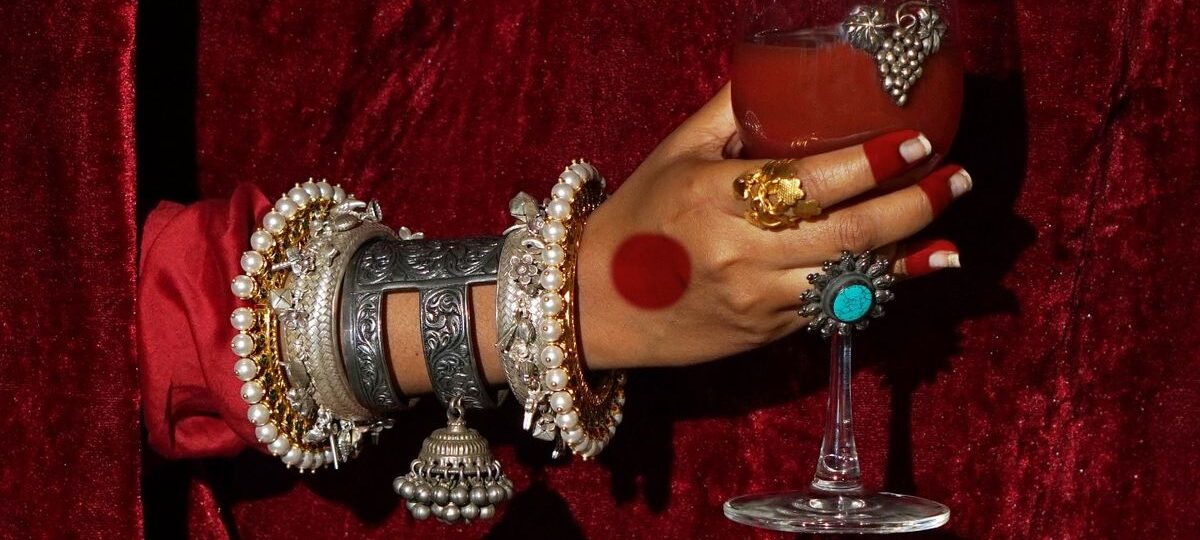
In South Asia, bangles remain a major symbol of cultural significance. In Hindu culture, the accessory is a frequent sign of marital status; women often wear stacks of thin bangles after marriage, and the pleasant sound of glass bangles clinking against one another is believed by some to bring about positive energy. In Bengali culture, bangles of white conch — shakha — and red coral — pola — are traditionally presented by elders to brides as a symbol of faith, purity and fertility.
Bangles can also be a symbol of religion. Many Sikh women wear a steel or cast iron bangle called a kara, or karha. The kara is considered one of the “five K’s,” or five physical symbols of the Sikh faith. Instead of simply being a piece of aesthetic jewelry, it becomes a tangible symbol of religious devotion.
Of course, sometimes a bangle is simply a fashion statement. Yet, from the thicker Rajasthani lac bangles to thin Pakistani glass chooriyan, it is near-impossible to find a South Asian community that does not incorporate bangles into festive, casual or religious attire.
But today, the once traditional bangle has become a much more mainstream — and some would argue, anglicized — form of personal expression. Many people who wear stacks of colorful bangles are not aware of the adornment’s historic or cultural significance; they merely appreciate the accessories for their bold, elegant appearance.
Bangles appeared to first gain popularity in the United Kingdom and the United States in the 1920s. At the time, the jewelry was frequently made of bakelite, the first fully synthetic plastic, as an affordable way to add flair to a standard outfit.
British poet Nancy Cunard became known in the ’20s and ’30s not just for her writing or activism, but for her unique personal style defined by the thick ivory bangles stacked all the way up her arms. The fashion may have been eccentric during her time, but today, celebrities like Zara Larsson, Lara Raj and Doechii are all posing with bangle-laden arms reminiscent of Cunard’s.
Bangles remain a staple of South Asian culture — as well as East and Southeast Asian cultures, especially with materials like jade and gold — but today, they are just as frequently worn by non-Asian fashionistas. Their sculptural shapes allow bangles to work both as a part of a unique stack and alone as a strong statement piece, and the sheer amount of variety makes the accessory easily customizable to one’s closet.
There are bangles in every color and material imaginable, and with that variety also comes a vast range in price points. Someone in the world is buying a full stack of bangles for under $10 as an affordable way to elevate their style; someone else is eyeing a $18,100, 18-karat gold cuff from Pamela Zamore as a luxury investment.
Jewelry trends frequently fluctuate between minimalism and maximalism, and if the popularity of thicker, chunkier bangles in fashion is any indicator, the scale is leaning toward the latter. The bangle’s versatility make it an excellent accessory, but its recent trendiness is just one piece in the adornment’s long history.
- Behind the bangle, fashion’s most timeless accessory - April 24, 2026