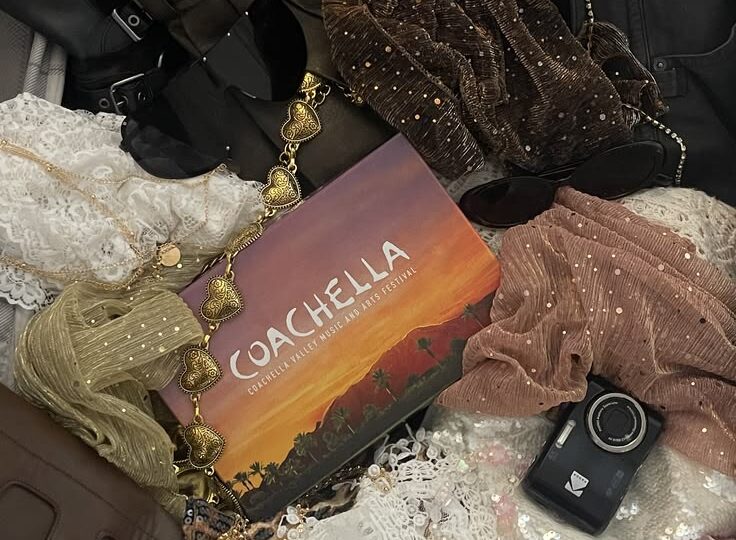
Today’s Coachella is a bona fide “influencer Olympics,” where TikTokers, vloggers and even goldendoodles with VIP wristbands compete to produce the flashiest sponsored content and secure the biggest poolside mansions. However, it was not always this way, and the consumerist glitz of today’s festival is antithetical to its late ’90s countercultural origins.
Coachella began as a large-scale, alternative, genre-blending and artist-focused festival, à la Glastonbury in the United Kingdom. The inaugural festival in 1999 featured Beck, Moby and Rage Against the Machine as headliners, and a two-day pass cost $50 (roughly $95-$105 in 2026).
In 1993, the band Pearl Jam refused to play at Ticketmaster-controlled venues in a boycott against their outrageous ticket prices. Since this limited their venue options, they played a show in an unconventional setting — the Empire Polo Club in the desert oasis of Indio, California. This high-profile dispute sparked interest in the repurposed polo club as a suitable venue for large crowds. Thanks to the backing of Goldenvoice promoter Paul Tollett, the Coachella Valley Music and Arts Festival debuted in April 1999.
In its early years, the festival struggled to stay afloat. The first Coachella took place on the heels of the chaotic Woodstock ’99 — marked by extreme heat, vandalism and a lack of resources to match the crowds — so its founders emphasized a controlled, music-centered experience, taking measures to prevent corporate profiteering, poor sanitation and lawless behavior. The festival took a hiatus in 2000 due to profit pressures and extreme heat, but returned in 2001 as a one-day event. It steadily expanded over the next decade, and today’s festival spans six days, across two weekends in April.
Today’s Coachella — a spectacle of extreme wealth, corporate sponsorships and Instagram feeds — is a sharp departure from the festival’s original ethos. Coachella’s trajectory is a common story for the Digital Age, where counterculture becomes a commercial status symbol and the profit motive takes center stage. Influencer culture is a more recent outgrowth of this wholesale transformation of art consumption and in-person community.
In 2026, a three-day general admission pass hovers around $550, and a VIP pass goes for about $1,200. These face-value prices do not factor in food, drinks, transportation and shelter, and it is common for influencer attendees to rent elaborate “glamping” accommodations. Everyone else is left to pick from a limited assortment of overpriced Airbnbs nearby. There is also a significant camping culture that rose in popularity throughout the 2000s, with attendees staying in traditional tents during the weekend, but more public-facing attendees enjoy the sponsorship of brands like American Express, Dove and Cash App. They sport Rhode Beauty pouches, 818 tequila sodas and Revolve sets in exchange for free festival passes or, depending on their star status, complimentary housing.
The Revolve Festival, launched in 2015, is the epitome of new Coachella norms. The invite-only display of influence and style is held during Coachella weekend by the fashion company Revolve. Celebrities from Kendall Jenner to Shaun White have attended the event over the years, basking in its lavish lounge, live music and abundance of freebies. It functions as “free food for millionaires,” where those who could easily afford the festival flock to the endless products and luxurious experiences from brands.
Although music artists still revere the chance to perform on such a prominent stage — and many deliver career-defining performances — the music has not been the festival’s main focus for at least a decade. This year, fans adored Justin Bieber’s return to the stage, but Hailey Bieber’s makeup pop-up got similar amounts of attention. Music acts as background noise, as opposed to the driving force of the festival. Not only does this contribute to the growing gap — both physical and sentimental — between the ultra-rich and everyone else, it also perpetuates a societal preference for soulless consumerism over art. It also reflects how counterculture has been dampened by corporate greed and the pursuit of wealth.
Regular people, struggling to make ends meet, can only watch as social media stars bask in their glamorous experiences and watch the world’s best pop acts as resentment builds. As grocery prices skyrocket, political turmoil plagues Americans and welfare programs are gutted, celebrities and influencers enjoy handouts from billion-dollar corporations. Right in the Coachella Valley, Hispanic immigrant farmers work on grape vineyards as their not-so-distant neighbors enjoy Coachella in dystopian contrast.
The irony of Coachella’s extravagance lies in its humble roots. Pearl Jam popularized the Empire Polo Club in opposition to the inaccessibility in the music industry, yet today the venue represents a luxury most people can only dream of experiencing. Coachella exists in the backdrop of the wealth gap in America, where a small group of people get wealthier and wealthier while others suffer.