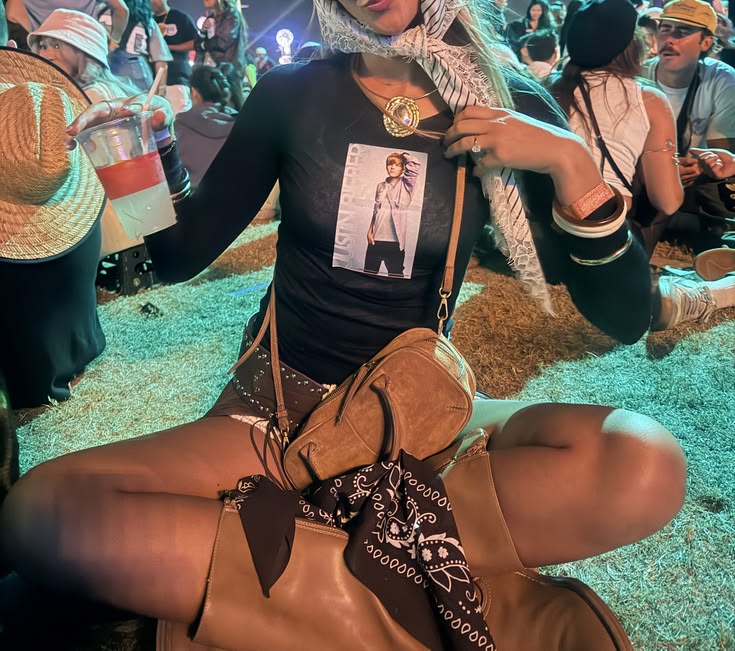
Gen Z has a new favorite feeling: yearning. Yearning is present in the books trending on #BookTok, the love songs on repeat in everyone’s playlists and the comment sections begging to “bring back yearning men.” It communicates a longing for a kind of love most of Gen Z has never experienced.
For some, this yearning seems to be for a love that sounds unachievable — the romance of the old American media: meet, fall in love, build a life together.
The appeal of romantic media reflects a desire for an escape into a story where love feels more certain.
“There’s a difference between the society and culture that we currently inhabit, and I think what young people dream for,” said Elizabeth Noble, a 19-year-old college student studying English.
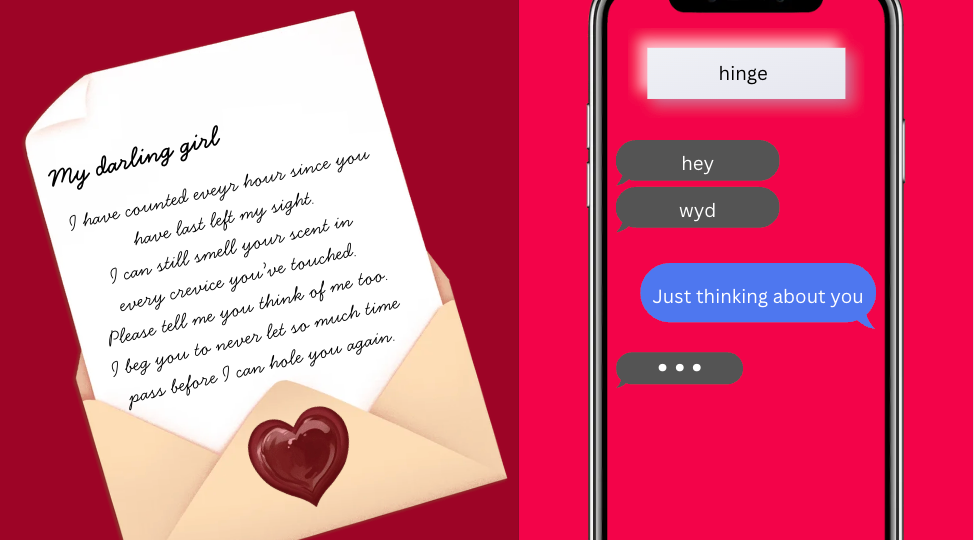
Off the screen, contemporary dating comes with its own collection of labels. The talking stage, non-exclusivity and situationships, just to name a few. Our generation has constructed an entire vocabulary for this murky zone in-between attraction and commitment, but putting a name to these so-called relationships does not make it easier for any of us to know where we truly stand.
For Luke Coyle, a 19-year-old sophomore, social media makes romantic connection and rejection feel more public than it needs to be.
“It’s better to seem like you don’t care and save on potential embarrassment later down the line,” he said.
Everyone wants to be chosen openly, but no one wants to be caught choosing, so we perform indifference. It is a shield against rejection that can leave two people yearning across the same small distance.
Handwritten letters, slow courtship and open declarations of affection are strongly appealing compared to this murky in-between. Old-fashioned displays of affection offer an image of love where effort is visible and interest does not have to be decoded. For older generations, this kind of courtship was routine, and it created a simple standard from the first date to a shared future. For Gen Z, the path has blurred, and most of that hope now lives on through pages and screens.
An nss magazine article traced expressions of longing through music, fictional characters and social media. From Jeff Buckley’s songs to Conrad Fisher in “The Summer I Turned Pretty,” audiences have found figures to attach their romantic ideals to.
However, watching that romance does not replace experiencing it. It leaves people feeling like they are missing something.
“I think you can mourn opportunities or things others got to live out when you didn’t,” Coyle said.
EJ Culleton, a 24-year-old university graduate, understands the appeal of old-fashioned gestures, such as writing a physical letter.For Culleton, writing a letter is harder than sending a text, and that’s the point.
“It shows that you put in effort and specifically thought to write a letter instead of sending a text or making a phone call,” Culleton said.
Culleton also enjoys the humor and elaborate premise of old romantic media such as “How to Lose a Guy in 10 Days,” while recognizing its distance from ordinary life.
Escapism is comforting, but when these stories become the standard for a real relationship, that same comfort creates disappointment.
“Media definitely sets expectations way too high for real world relationships,” Coyle said.
In Psychology Today, Bruce Y. Lee questions whether someone longing for a person or idea they barely know is attached to a fantasy they created in their minds. The fantasy reveals what someone wants while making it harder to accept what another person can realistically give.
That does not mean modern dating cannot work. Culleton sees another explanation for why relationships remain temporary. She said that constantly moving between cities makes commitment difficult when she does not know how long she will stay in one place.
“I think modern dating suits modern life, and I understand how it came about,” she said.
Someone can want meaningful affection without being ready to organize both their present and future around a relationship. And the old-fashioned romance and its gestures tied to another era can still happen now.
Sarah Chen, a college freshman, described her own experience with a friend turned romantic partner, whose actions reflect those of old fashioned romance.
“I’m actually locked down with that guy right now,” Chen said. “And he’s written me letters already and bought me flowers, which I think is really sweet.”
Yearning makes people believe they are missing a love that exists only in stories. It also encourages them to look for the effort and affection they want. The trouble starts when the escape becomes the expectation, and a real relationship has to compete with an imagined one.
Noble thinks it comes down to what young people want versus what they actually have.
“There’s a difference between the society and culture that we currently inhabit, and I think what young people dream for.”
- Gen Z and the Love Story we were Promised - November 3, 2026