When I was 17, “Euphoria” was my most trusted authority on coming-of-age — for better and for worse.
With my first paycheck, I bought the same plum I.AM.GIA cutout set that Maddy Perez (Alexa Demie) wore in the carnival episode, followed by a blue bodycon number Cassie Howard (Sydney Sweeney) donned at the infamous New Year’s Eve party where she betrays her best friend. Although I look more like Cassie — honey-blonde and blue-eyed — I wanted to be a Maddy: a femme fatale who took no prisoners.
Sam Levinson’s antihero journey into the dark underbelly of American suburbia distilled and spun my teenage discontents into an avant-garde art house. The point of the show, I avowed, was stylized surrealism; in “Euphoria,” teenagers sparkled like the pink powders that took them to higher places at the county carnival.
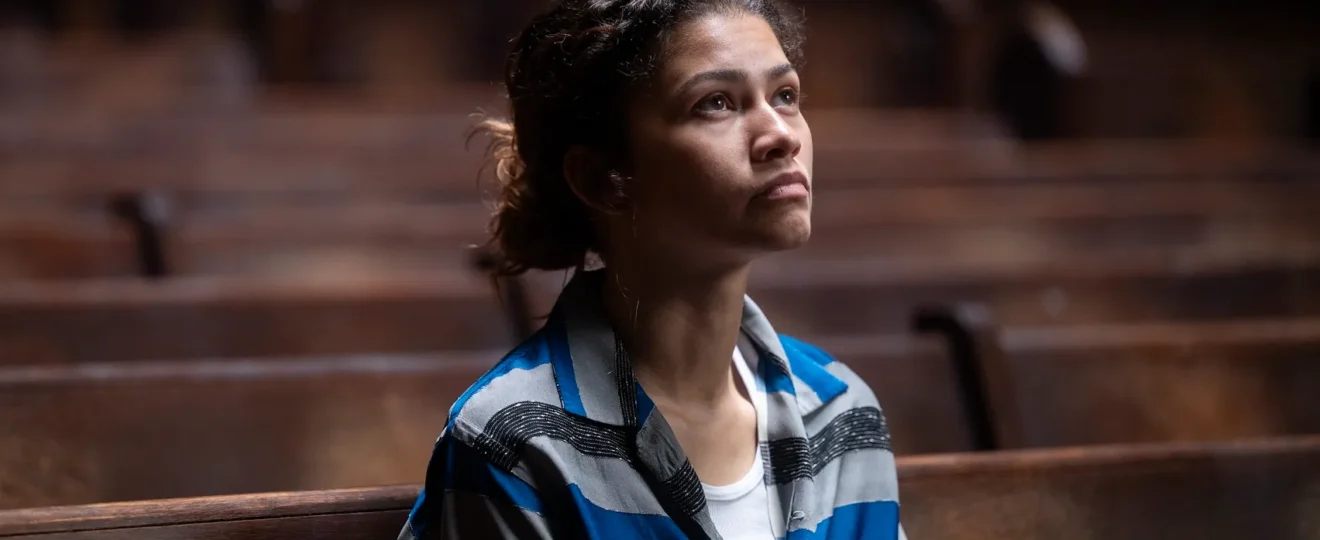
“Euphoria” follows 17-year-old addict Rue Bennett (Zendaya) and a motley crew of troubled teens in an unnamed Southern California suburb as they navigate sex, substances, spiritual malaise and the ambient specter of digital nativity. Moral panic over the first season, released in 2019, centered on Levinson’s supposed glorification of drug abuse and graphic depictions of teen sexuality. While Levinson’s later projects — most notoriously “The Idol” — cast his sleazebag tendencies into sharper view, I am still a valiant defender of the gritty, melodramatic ethos of “Euphoria.”
My own adolescence was truncated by the pandemic, and my most cinematic going-out moments took place on an Astroturf field on the outskirts of Baltimore. However, through the hypersaturated fisheye lens of Rue Bennett, the students of East Highland High School were my kin in the Herculean battle of being an American teenager.
Our problems were not on the same scale — instead of battling opioid addiction, my friends and I debated which anti-anxiety medication to take during college application season — but the emotional truth of being young, dumb and lost rang truer than other contemporaneous bildungsromans. “Sex Education” and “Never Have I Ever,” while laugh-out-loud funny and heartfelt, aligned less closely with my experience of high school as a lawless, often vicious place.
The kids I knew grew up fast, and even if I did not personally know small-time drug lords like Fezco O’Neill (Angus Cloud), I had acquaintances who went in and out of rehab facilities and psychiatric hospitals. At least in the particularly consumerist, often skin-deep culture of Baltimore private schools, girls sexualized themselves on the internet beginning in the seventh grade.
When the second season aired in 2021, my friend group and I held weekly “Euphoria” watch parties. We named certain peers as Cassie and Maddy analogs, projecting their torrid love triangle with sociopathic quarterback Nate Jacobs (Jacob Elordi) onto a much less black-and-white real-life affair.
When the first season aired, the supposedly extinct era of prestige television saw a second wave on streaming platforms. Acerbic dramedies about rich people behaving badly, à la “Succession” and “White Lotus,” united X users across the nation. “Game of Thrones” was a comedy of errors by 2019, but it seemed like every American with cable saw that misplaced Starbucks cup in the Great Hall of Winterfell.
Teen dramas, meanwhile, lay dormant after the mid-2000s CW channel soaps closed up shop. “Euphoria,” at least in concept, seemed like a highbrow answer to this power vacuum, flush with the backing of indie darling studio A24 and an exceptional soundtrack that wove Labrinth’s haunting synth score with needle drops from Sinead O’Connor, Steely Dan and Arcade Fire.
Flash forward to April 2026, and “Euphoria” is midway through its comically delayed third installment. The gang is all grown up, but no one is any wiser. Rue is a drug mule turned lesbian pimp plucked from a postmodern Western; Nate and Cassie are Orange County Republicans; Jules Vaughn (Hunter Schafer) is a glorified escort; Maddy is a secretary for a Hollywood talent agency; and Lexi Howard (Maude Apatow), the grounded wallflower, is a showrunner’s assistant.
The third season of “Euphoria” is an entirely distinct project from the oversaturated opera of the show’s early years. While it has reentrenched a front-and-center foothold in the cultural conversation, many contend it has lost all touch with the zeitgeist and has become merely a funnel for Levinson’s twisted fantasies. I do think Cassie’s OnlyFans plotline and the surfeit of sex worker themes revive tired discourse last beaten to death in 2021.
Still, I wonder whether the prevailing disdain for “Euphoria” is more a reaction against the show’s behind-the-scenes controversies. It is futile not to project Schafer and Elordi’s private rift and Sweeney’s “MAGA Barbie” persona onto their Season 3 storylines, but the intractable metaness of the writing is, for me, part of the pleasure in watching.
As I prepare to graduate college, I can not help but walk around in a heady daze of nostalgia, and the return of “Euphoria” feels like a fitting end credit to my youth as I have known it since the pandemic. I do not anticipate my trajectory to mirror that of any East Highland High School alum, save perhaps Lexi, and unlike in high school, I have lost that visceral identification with their world. I am fortunate enough to have gone to school in a place where I could grow into some semblance of a mature, functional adult, and unlike Rue, I am not forever answering for what I did at 17.
Just like America — and me — nothing is the same as it was in 2021, and “Euphoria” is as dark and glitterless as Trump 2.0 and the AI revolution. There is an ultraviolent rot at the center of this season, and even if this was not Levinson’s intention, the third season is the perfect swan song for the bleeding-out, savage neon heart of the American dream.
- The appeal of “fresh faces” in media: “Heated Rivalry” versus “Wuthering Heights” - May 12, 2026
- Euphoria Season 3 Review - May 9, 2026