When the world first met Superman in 1938, writer Jerry Siegel gave him a simple purpose: “Superman: Champion of the Oppressed!”
That year, in the wake of the Nazi invasion of Austria, the threat of a global conflict was looming. Suddenly, Orson Welles’ “War of the Worlds” radio broadcast became an emblem of the social anxieties and distrust of anything out of the ordinary that characterized the interwar era. But it seemed everything changed when a spandex-clad Boy Scout named Clark Kent fell to Earth and taught us a simple lesson: fight for what is just, no matter who is wrong.
Nearly 90 years later, Superman has persisted in the social consciousness, even in the face of a few Zach Snyder-ized renditions we all prefer to keep in the rearview. Nonetheless, his mission has stayed clear.
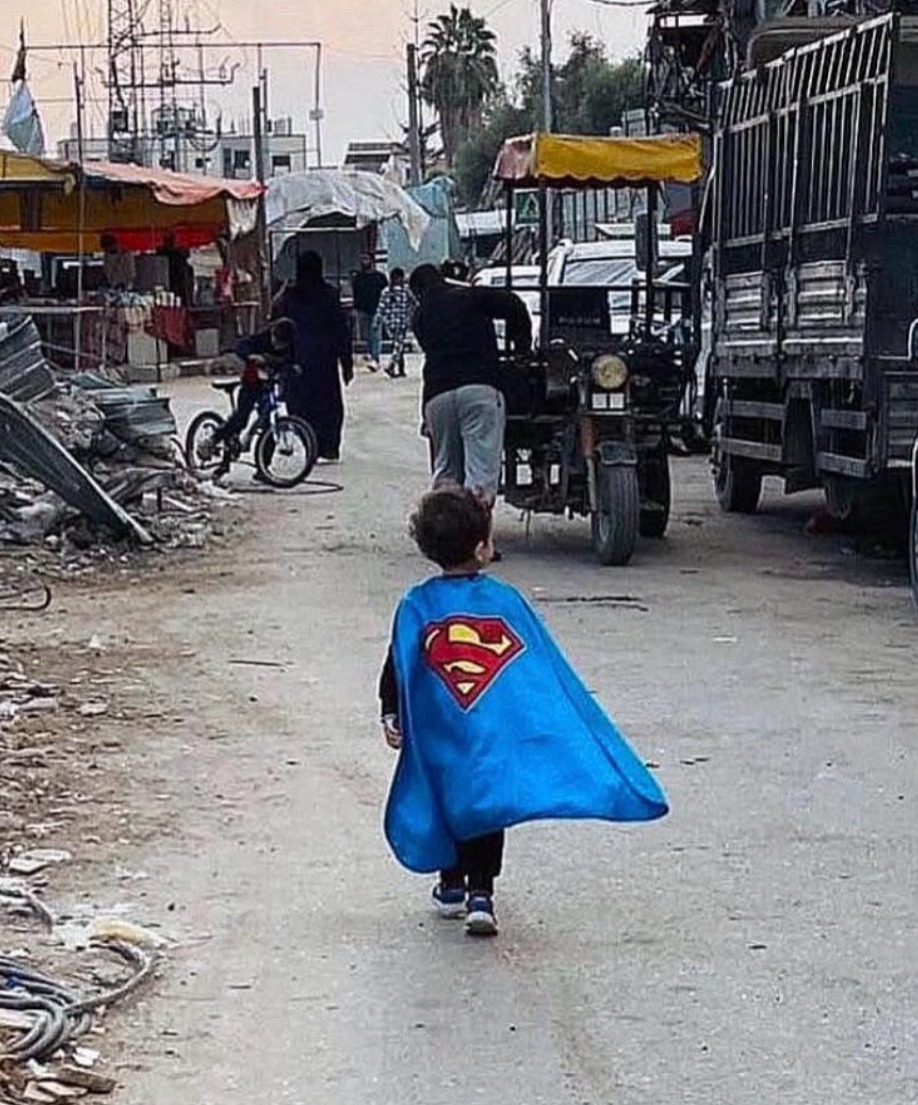
He’s fought the Nazis, the KKK and the evil cabal of the ultrarich, manifested in the form of the infamous Lex Luthor. However, for many, Superman has become just another face of American blind patriotism, a Captain America-adjacent figure adopted by the GOP. This new digestible, all-American Superman persisted in the public conscience. That was, until a genocide began.
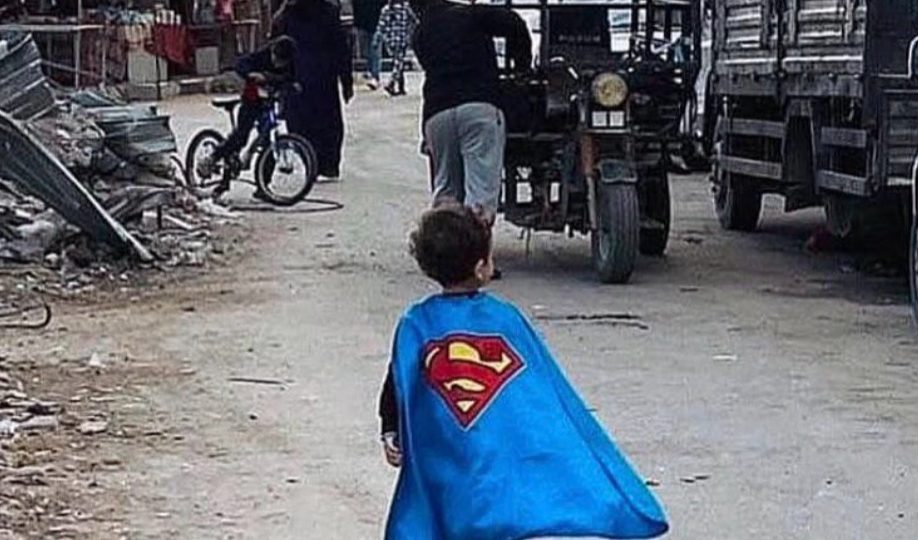
As the violence in Palestine has escalated, U.S. foreign policy continues to reflect self-interest and a lack of humanity toward Palestinian victims. Generation Z, feeling increasingly estranged from their leaders’ appalling attitudes, needed a hero. So, writer and director James Gunn set out to give them that beacon of hope.
I walked into the new “Superman” expecting nothing special. A few solid action scenes, some wicked CGI and 129 minutes of distraction. I left the theater optimistic about the future of the world.
The film centers around a fictional but all-too-familiar conflict between two far-away nations. Boravia, a powerful ethnically white nation led by a Netanyahu-shaped Vasil Ghurkos, pushes for the invasion of nearby Jarhanpur, an ethnically nonwhite nation, under the pretext of territorial expansion.
From the beginning, Gunn sets the tone for a clear-cut settler-colonial conflict. Sound familiar?
Alongside Ghurkos, Luthor makes his return as the iconic corrupt billionaire, pumping money into Boravia and instigating the conflict for his own financial and political gain. He plays the role of another familiar figure, only without the toupee.
Superman is, after all, quite qualified to understand the meaning of losing a home. He is one of the few survivors of Krypton, a planet whose destruction wiped out his entire civilization. He was sent to Earth as an infant by parents who knew they could not save themselves, hoping that their son might have a chance to start anew.
Symbolically, Superman and anyone else who dares to challenge Luthor or the Ghurkos regime accused of mass violence are locked away in cramped, degrading detention centers that bear an eerie resemblance to today’s ICE detention centers.
While Superman has always faced oppression head-on, Gunn takes a contemporary approach to the film’s “villains.” In this iteration of “Superman,” they pose a unique and modern threat to our hero — they are part of a propaganda machine.
One of the most poignant choices of the film is Gunn’s depiction of online attacks from Luthor and the Boravian regime to sabotage Superman’s reputation. They develop propaganda centers run by monkeys to defame Superman across social media.
The absurdity is hilarious, but also scarily appropriate in a world drowning in Redditor hate.
They use Islamophobic slurs, accusing Superman of attempting to dominate the world. These choices are starkly similar to Israel’s current propaganda, where the regime shifts the blame to the oppressed civilians, painting them as terrorists in an attempt to garner support and avoid repercussions.
This is a classic political strategy of manipulation. If you can convincingly redefine the innocent as a dangerous threat, you can justify your violence against them.
The film’s final confrontation between Superman and Luthor was the pièce de résistance:
Superman flies into Luthor’s headquarters and is met with familiar insults about his alienness, his lack of belonging and his supposed inability to understand humanity.
Luthor, of course, frames Superman’s otherness as a weakness. He is an alien. He does not belong here. He should, familiarly, “go back to where he came from.”
Superman’s response brings it home.
“I’m as human as anyone,” Superman said. “I love, I get scared, I wake up every morning and despite not knowing what to do, I put one foot in front of the other, and I try to make the best choices I can. I screw up all the time, but that is being human, and that is my greatest strength.”
Gunn gives us one more beautiful ode to the strength of otherness around the world.
We, despite our differences, are all human.
By framing Superman as essentially an interplanetary immigrant, Gunn gives us a whole new perspective on his attitude toward the world he so staunchly defends. We get a Superman detached from political allegiance to the United States, one that embraces humanity in all of its ugliness and will always fight for what is right, no matter where it comes from.
Art, by nature, is political. Yes, that includes comic book superheroes. Superheroes are mediums through which children — and some adults — are exposed to some of the most basic moral concepts: good and evil, right and wrong, courage and cowardice and what it truly means to be a hero.
In the words of Jonathan Kent, Superman’s adopted father, for all you non-geeks, “Your choices, Clark, your actions,” Gunn wrote. “That’s what makes you who you are.”
- Superman is Saving the World — Again - November 13, 2026
- Why We’re Falling in Love with “The Bride!” - March 27, 2026
- It Might Get Loud: Punk’s Revolutions on Repeat - March 17, 2026