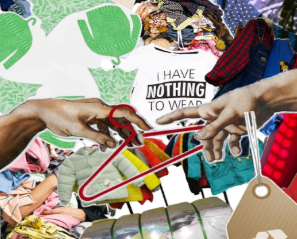
In an era of increased globalization, society has ushered in a new echo chamber of overconsumption.
As flash sales encourage rapid spending: hurry! Experience 25 percent and 75 percent off if you shop now! And pressured advertising expedites urgency; “Today, and only today, then tomorrow — buy three get three free!” consumers are constantly prompted.
But what happens to your old jeans, shoes, tops and skirts when you replace them with something new every season, every month or every week? Perhaps you pass them down or donate them, believing you are giving your old things a second chance. But more than 75 percent of donated clothing ends up incinerated or in a landfill.
In total, the fashion industry produces around 92 million tons of textile waste each year.
This begs the question of who is responsible: the consumer, the brand, the corporation or the government? The buyer is constantly spending on the newest, cheapest fashion, but the brand is flooding their inbox with flash sales and promotions. The corporation is demanding higher levels of production, but the government is not seeking to slow their commands — that is, in some countries.
The European Union, in the wake of 2026, has sought to curtail the fast fashion boom with a slew of policy regulations intended to mitigate apparel overconsumption and textile waste.
The passage of the Ecodesign regulation set into motion a strict ban on the destruction of unsold clothing products that will take effect this year. Minimum standards and requirements for a wide range of variables, including durability, recyclability and repairability, have also been established. A large part of the Ecodesign regulation will now require all products to carry a Digital Product Passport. This initiative aims to promote transparency by revealing items’ life cycle while proposing recommendations for appropriate disposal.
In 2025, an addition was made to the Waste Framework Directive that introduced Extended Producer Responsibility (EPR) for textiles and apparel. This revision determined that producers would take on financial responsibility for the end-of-life, also known as the waste stage, of their products.
The responsibility has landed on the brands and corporations, steering the culpability away from the consumers.
Although the EU is leading the charge in holding corporations more accountable for their waste generation, the consumer still carries the weight of their spending habits. In an age where quantity is becoming increasingly valued over quality, the informed consumer can truly make all the difference.
Understanding the marketing tactics behind discounts and sales and knowing the truth behind low prices and fast trends can lead to saving more in the long run.
Because in the end, spending more on cheap clothes today and tomorrow that only lasts five wears will result in higher costs later, both for the planet and for your wallet.
- A fashion faux-pas and the European Union response - March 25, 2026