It’s 1970s Britain, and skyrocketing inflation has chewed through wages. Unemployment among young adults has ballooned. The postwar social contract — the promise that if you worked hard enough, you’d live decently — has begun to crack.
Margaret Thatcher’s premiership enshrined a neoliberal philosophy based on privatization, deregulation and the slashing of social services. The decade gained a reputation for violence, marked by frequent terrorist bombings, extreme police brutality in Black neighborhoods and a stark spike in heroin and cocaine use.
Punk, a youth-driven subculture, viscerally responded to a collective sense of Thatcher-era alienation. The Sex Pistols snarled about having “no future,” which was less empty nihilism than astute diagnosis. The band ushered punk into the mainstream through their ties to designer Vivienne Westwood, the “godmother of punk”.
Punks generally aligned themselves with anti-fascist and anti-racist movements that were organizing in the streets, such as the “Rock Against Racism” movement, made up of Punk and Reggae musicians who rallied against the growing rate of racist violence and far-right parties such as the National Front. The Clash wrote explicitly about the British Empire’s afterlife and state-sanctioned racism against West Indian descendants of the Windrush Generation. X-Ray Spex pioneered the female and non-white Punk movement, giving a loud voice to the groups being violently targeted by British society.
Punk began to spread beyond Britain, becoming a worldwide phenomenon as thriving scenes developed in the United States and broader Western Europe. Punk gigs became contested spaces and sometimes literal battlegrounds where culture wars broke out. A famous example of this is the infiltration of skinhead neo-Nazi groups at gigs of the popular LA Punk band Black Flag — a group known for actively opposing far-right and racist groups.
Today’s punks extend the mid-1970s “big bang” of punk into 21st-century discontent. Today, wealth stratification has entrenched caste-like socioeconomic disparities; meanwhile, surveillance capitalists track dissent, box it up and sell it back as clickbait content. Across Europe and the United States, ethno-nationalist movements gain traction by viciously “othering” minorities and political opponents.
This backdrop created punk renaissance bands like IDLES, who interrogate toxic masculinity, xenophobia and the mythology of empire. Their album, “Joy as an Act of Resistance,” is emblematic of the current punk wave. Meanwhile, the Lambrini Girls adopt riot-grrrl stylings to air the grievances of queer womanhood. Their anthems “Boys in the Band” and “God’s Country” earned them the UK’s LOUD WOMAN award in 2025.
In both 1976 and 2026, punk rose to popularity when young people contended with crumbling systems. In Thatcherite Britain, that meant declining unions, political extremism and corporatized media. In 2026, we face social media platforms that profit off of people’s suffering, growing income inequality, and the far-right’s resurgence.
This sense of doom can be seen even in the discourse over concert ticket prices. Ticketmaster, known for near-monopolizing the concert ticket market, has algorithmically and arbitrarily inflated costs, making the consumption of live art a luxury few can afford. This exclusion is ideological, reinforcing the notion that participation in cultural industries is tiered. It’s premium access for premium wallets.
In the early days, punk thrived in cheap venues because it had to — low overhead meant low barriers to entry. Pop-prince Yungblud’s BLUDFEST fights to resurrect this affordable DIY culture, charging under $20 for festival passes.
“Punk” often conjures white, working-class Londoners or New Yorkers, but that narrative obfuscates foundational figures like Bad Brains, a Washington, D.C., punk outfit whose speed and ferocity pioneered hardcore punk. Their radical hybridity fused Blackness, spirituality and sonic innovation to push the boundaries of punk.
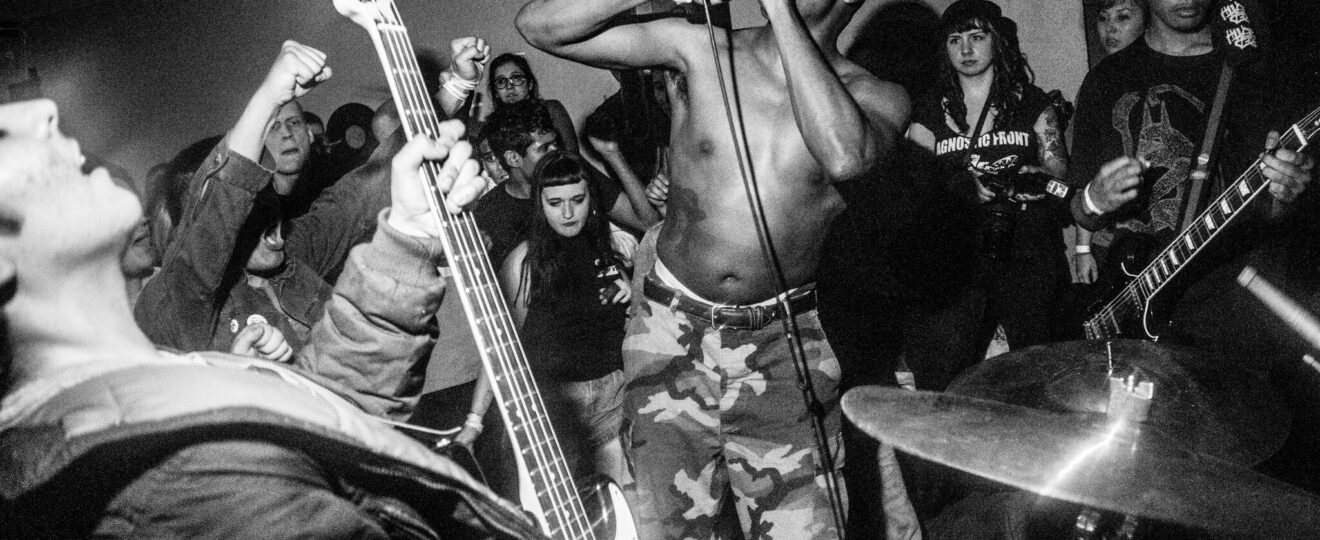
Today, Big Joanie and ho99o9 continue this legacy. Big Joanie confronts British history, colonialism, and the erasure of Black women from the history of alternative music. ho99o9 channels the vibes of a very real modern dystopia: sirens, distortion and rupture blend into a sound that mirrors militarized policing and systemic neglect.
Punk rises when the story force-fed to us stops matching our reality, and the cost of silence outweighs the risk of noise. As long as there is a system, there will be a basement or a field filled with the telltale buzzsaw drone of a punk guitarist.
- Why We’re Falling in Love with “The Bride!” - March 27, 2026
- It Might Get Loud: Punk’s Revolutions on Repeat - March 17, 2026
- Why Jazz Is Back in the Zeitgeist — And Why It’s No Coincidence - December 23, 2025